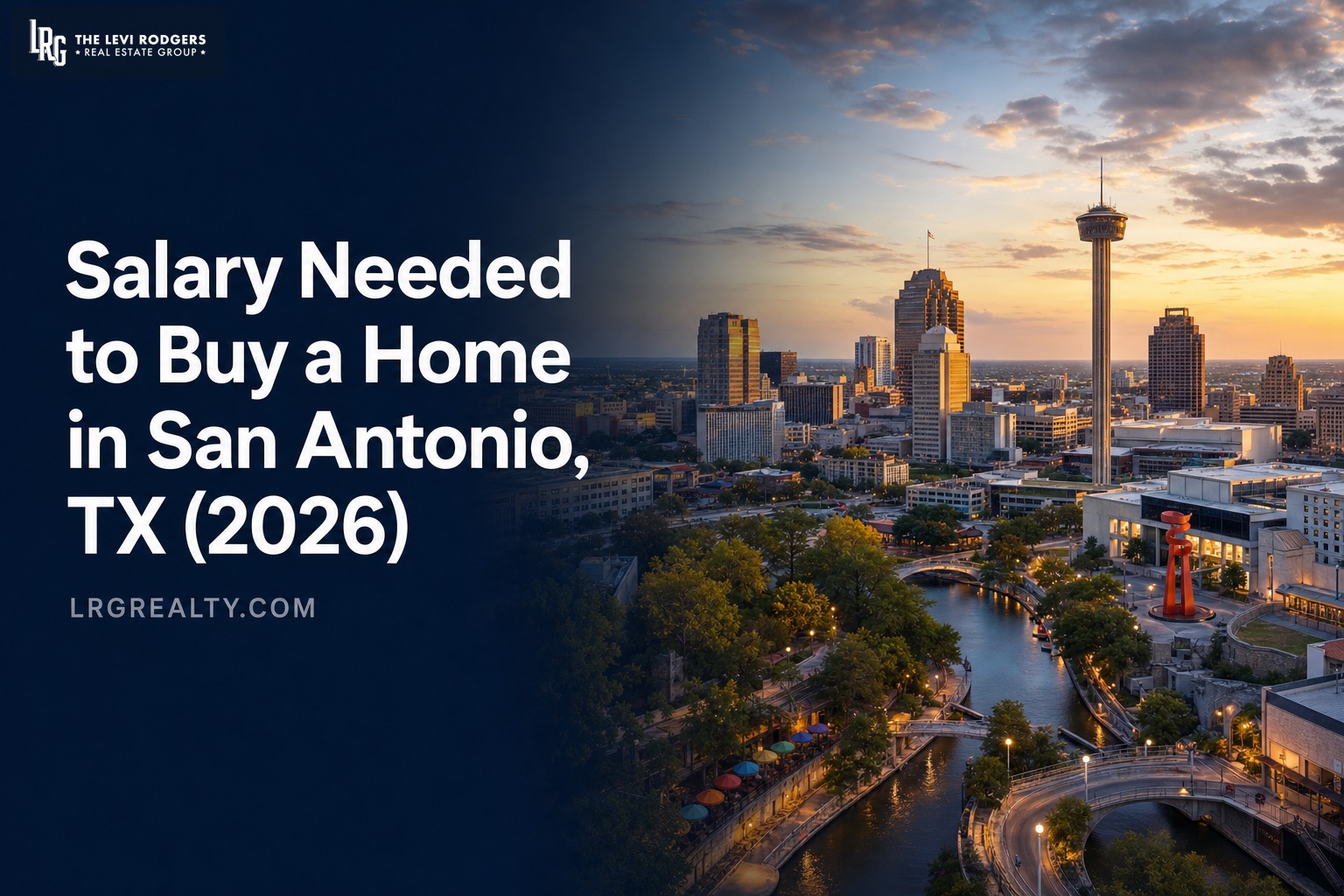

San Antonio is affordable, warm, and growing. The tradeoffs are real: summer heat and car-dependent sprawl. This guide covers the pros and cons using current data so you can decide whether San Antonio fits before you move.
Housing Cost
- Median sale price: $299,275 in August 2026, per SABOR. Unchanged year over year.
- Well below the Austin MSA median of $412,000 for the same month.
Jobs
- 4.5% unemployment in the San Antonio-New Braunfels MSA, August 2026, per BLS.
- Major employers include JBSA, USAA, H-E-B, Valero, and the healthcare sector.
Weather
- Annual average: 69.6 degrees F. Summer highs reach 92 to 96 degrees F from June through August. September averages 90 degrees F.
- Mild winters with lows in the low 40s. Annual precipitation: 32.38 inches. NOAA climate normals.
No State Income Tax
- Texas has no state income tax. Property taxes carry a larger share of the tax burden.
- See the San Antonio property tax guide for rates by district.
Is San Antonio affordable compared to Austin?
The SABOR August 2026 median sale price for the San Antonio area was $299,275. The Unlock MLS August 2026 Austin-Round Rock MSA median was $412,000. Both cover the same month. The geographies differ: SABOR covers 10+ counties, and the Unlock MSA covers the Austin metro. For a detailed comparison, see the cost of living comparison.
What are the biggest downsides of living in San Antonio?
Summer heat is the most consistent complaint. Highs reach 92 to 96 degrees F from June through August, with September still averaging 90. Stretches above 100 degrees occur. The city is car-dependent with limited public transit. Traffic on I-35, Loop 410, and Loop 1604 is heavy during peak hours.
Is the job market strong enough to support a move?
The San Antonio-New Braunfels MSA unemployment rate was 4.5% in August 2026, per BLS. Joint Base San Antonio is a major employer in the region. USAA, H-E-B, Valero, and the healthcare sector anchor the private-sector economy. Tech and cybersecurity have grown, partly driven by the defense sector’s presence. Whether the job market supports your move depends on your industry and whether you are relocating with a position or searching after arrival.
The Bottom Line Up Front
San Antonio works well for buyers who want lower housing costs, mild winters, no state income tax, and access to JBSA and healthcare jobs. The SABOR August 2026 median sale price of $299,275 sits well below the Austin MSA median of $412,000. The tradeoffs: summer heat that peaks in the mid-90s from June through August, with September still averaging 90 degrees, and car-dependent sprawl. This page covers the data behind each factor so you can weigh the pros and cons before committing.
Housing Costs
The SABOR August 2026 median sale price for the San Antonio MLS area was $299,275, unchanged from August 2025. Active listings totaled 16,940 with 5.87 months of supply. Homes sold for 92.8% of their original list price.
- Median sale price: $299,275 in August 2026, unchanged year over year, per SABOR.
- Compared to Austin: The Unlock MLS August 2026 Austin-Round Rock MSA median was $412,000. Both figures are from August 2026 but cover different geographies.
- Inventory: 16,940 active listings with 5.87 months of supply. Homes averaged 82 days on market, up 11% year over year.
- For full market data: See the San Antonio housing market data page.
Jobs and Economy
The San Antonio-New Braunfels MSA unemployment rate was 4.5% in August 2026, per the Bureau of Labor Statistics. The metro’s economy is anchored by Military, healthcare, financial services, and energy.
- Joint Base San Antonio: A major employer in the region, spanning Lackland AFB, Randolph AFB, and Fort Sam Houston. JBSA drives demand for housing, services, and contract work across the metro.
- USAA: Headquartered in San Antonio with a large workforce in insurance, banking, and technology.
- Healthcare: The South Texas Medical Center houses Baptist Health System, University Health, and Methodist Healthcare. The Audie L. Murphy VA Medical Center serves Veterans separately.
- H-E-B: Headquartered in San Antonio with grocery operations, tech, and corporate functions.
- Cybersecurity and tech: Growing sector, partly driven by the Military’s cybersecurity mission at JBSA-Lackland. Port San Antonio has attracted tech and aerospace tenants.
Weather and Climate
San Antonio’s climate is subtropical with hot summers and mild winters. All figures below are NOAA climate normals from the National Weather Service Austin/San Antonio office.
| Season | Average High | Average Low | Precipitation |
|---|---|---|---|
| Winter, Dec to Feb | 63.3 to 67.5 degrees F | 41.0 to 45.1 degrees F | 1.74 to 2.08 in/month |
| Spring, Mar to May | 73.8 to 86.6 degrees F | 51.8 to 66.4 degrees F | 2.31 to 4.4 in/month |
| Summer, Jun to Aug | 92.4 to 96.0 degrees F | 72.7 to 74.9 degrees F | 2.15 to 3.28 in/month |
| Fall, Sep to Nov | 71.7 to 90.1 degrees F | 49.8 to 69.6 degrees F | 2.08 to 3.88 in/month |
- Summer heat: June through August averages highs of 92 to 96 degrees F. September averages 90.1 degrees F. Extended stretches above 100 degrees occur. Air conditioning is a non-negotiable cost.
- Mild winters: Freezing events are infrequent. Winter lows average in the low 40s. Snow is rare.
- Annual precipitation: 32.38 inches spread across the year. Flash flooding is a risk during heavy rain events, especially near creek corridors.
Schools
San Antonio is served by multiple school districts. The three largest within the city are North East ISD, Northside ISD, and San Antonio ISD. District boundaries do not follow intuitive lines. The school district covering your address depends on the exact property location. TEA publishes annual accountability ratings at txschools.gov. Verify the campus assignment for any property before making an offer.
Commute and Transportation
San Antonio is car-dependent. Public transit exists through VIA Metropolitan Transit but does not serve most suburban neighborhoods with frequency or coverage comparable to Austin or Dallas. Major highways include I-35, I-10, Loop 410, and Loop 1604. Peak-hour congestion is heaviest on I-35 through downtown and on Loop 1604 in the north and northwest corridors.
- I-35: The primary north-south corridor. Heavy during peak hours through downtown and toward New Braunfels.
- Loop 1604: The outer loop. Northwest 1604 near USAA and the Medical Center is the busiest segment.
- Loop 410: The inner loop. Less congested than 1604 in most segments.
- Remote work: If you work remotely, the commute tradeoff disappears and San Antonio’s housing cost advantage is fully captured.
Who San Antonio Fits
- Military families: JBSA spans three installations and is a major Military employer. BAH rates cover a meaningful portion of housing costs at the San Antonio median. If you are PCSing to JBSA, San Antonio is designed around your needs.
- Buyers priced out of Austin: The SABOR median sits well below the Austin MSA median, buying more space, newer construction, and lower monthly payments.
- Healthcare professionals: The South Texas Medical Center and the Audie L. Murphy VA Medical Center anchor the healthcare sector. Short commutes to medical campuses are available from several neighborhoods.
- Remote workers: If your income is not tied to the local job market, San Antonio’s housing costs and no state income tax maximize your take-home pay.
- Retirees: Mild winters, lower housing costs, the over-65 homestead exemption, and proximity to the Audie L. Murphy VA Medical Center and Brooke Army Medical Center make San Antonio a draw for retirees.
Who Should Think Twice
- Heat-sensitive households: If you cannot tolerate 90+ degree days for four months, San Antonio’s summer will be a problem. Air conditioning costs are a real budget line.
- Transit-dependent households: VIA does not provide the coverage or frequency needed for car-free living in most parts of the city.
- High earners in specific industries: If your field pays meaningfully more in Austin, Dallas, or Houston, the salary gap may offset the housing savings. Model the full picture before deciding.
- Walkability seekers: Outside a few pockets downtown and in the Pearl District, San Antonio is a driving city.
Frequently Asked Questions
Is San Antonio a good place to live in 2026?
San Antonio offers lower housing costs than Austin and Dallas, no state income tax, mild winters, and a Military and healthcare employment base. The tradeoffs are summer heat and car-dependent commuting. Whether it fits depends on your job, budget, and tolerance for heat.
What is the cost of living in San Antonio?
The SABOR August 2026 median sale price was $299,275. Texas has no state income tax. Property tax rates vary by district. See the San Antonio property tax guide for rates. For a full cost comparison with Austin, Dallas, and Houston, see the cost of living comparison.
What are the pros and cons of San Antonio?
Pros: affordable housing, no state income tax, mild winters, JBSA and healthcare jobs, growing tech sector. Cons: summer heat peaking in the mid-90s June through August, car-dependent layout, limited transit, I-35 and Loop 1604 traffic.
How is the job market in San Antonio?
The MSA unemployment rate was 4.5% in August 2026, per BLS. JBSA is a major employer. USAA, H-E-B, Valero, and the healthcare sector anchor the private economy. Cybersecurity and tech are growing. Whether the job market fits depends on your industry.
What are the best neighborhoods in San Antonio?
It depends on your budget, commute, and school district priorities. See the San Antonio neighborhoods guide and the Stone Oak guide for neighborhood-level detail.
How hot does San Antonio get in summer?
NOAA climate normals show average highs of 92 to 96 degrees F from June through August, with lows in the low to mid-70s. Extended stretches above 100 degrees occur. September stays warm with an average high of 90.1 degrees F.
Is San Antonio better than Austin?
They serve different needs. San Antonio’s SABOR August 2026 median is $299,275 versus the Austin MSA median of $412,000. Austin offers a walkable urban core that San Antonio does not. San Antonio has a large defense sector anchored by JBSA and a concentration of healthcare employers. The right choice depends on your job, budget, and lifestyle priorities.
Is San Antonio growing?
SABOR’s August 2026 data shows 3,104 closed sales, up 4% year over year. Active listings held at 16,940. The metro continues to attract relocating families, retirees, and buyers priced out of Austin. Growth patterns concentrate in the northwest and northeast corridors along Loop 1604.
Data and Methodology
Housing data from the SABOR August 2026 press release, published September 10, 2026, fetched from sabor.com on October 2, 2026. Austin comparison from the Unlock MLS August 2026 Central Texas Housing Report. Unemployment rate from the Bureau of Labor Statistics, San Antonio-New Braunfels MSA, August 2026. Climate normals from the National Weather Service Austin/San Antonio office, NOAA climate normals for San Antonio. No BEA Regional Price Parities or Census population figures are stated because those sources could not be fetched in this session.